
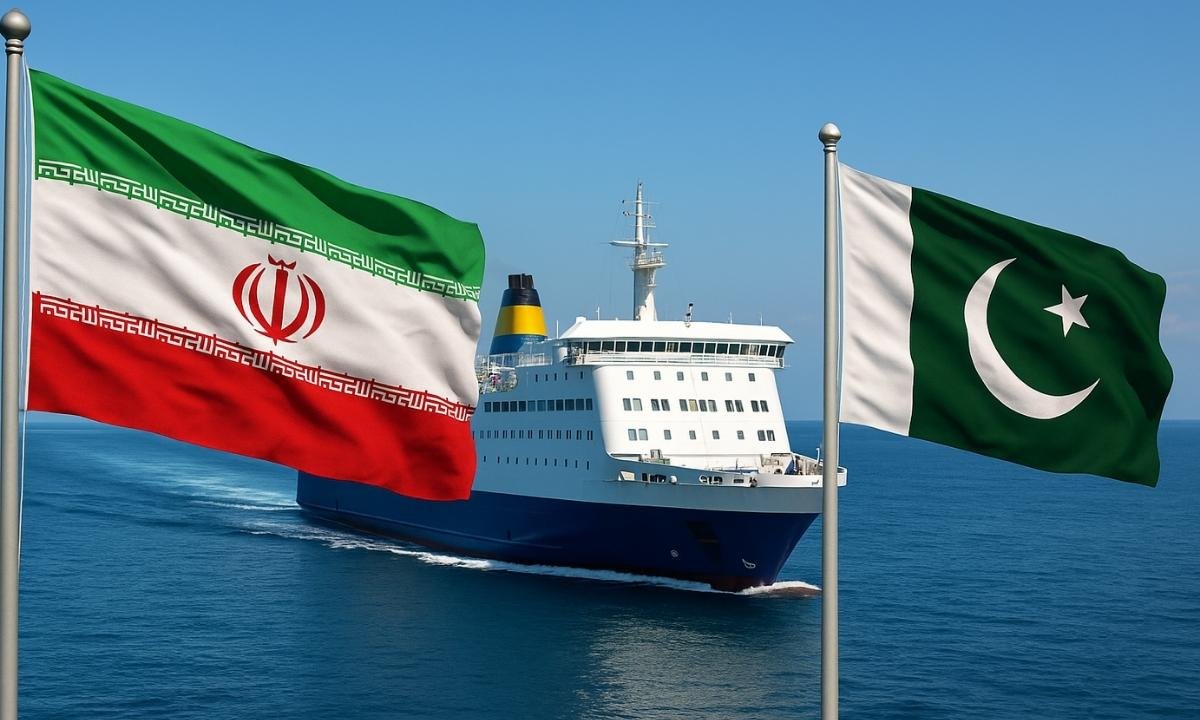
Iran Sets Sail on First Ferry Link with Pakistan
M Ali
Islamabad: As pilgrims face restrictions on road travel due to the deteriorating law and order situation in Balochistan, Iran has agreed to Pakistan’s proposal to launch the first ferry service between the two countries.
Every year, 700,000 to 1,000,000 Pakistani Zaireen travel to Iran and Iraq. If even 20% opt for ferries in the first three years, that’s 140,000 to 200,000 passengers annually—representing significant economic potential
Currency Converter
Pakistan is reaching out to various nations, particularly in the Middle East, to initiate ferry services for both tourists and goods.
Sources told Newstoday92.com that Iran is the first country to officially convey its willingness to use the proposed ferry service by the Government of Pakistan.
Currently, thousands of pilgrims travel to Iran by road via Balochistan. However, terrorist groups in the region have increasingly targeted travelers—particularly those from Punjab—raising serious safety concerns.
Federal Minister for Maritime Affairs, known for his visionary leadership, has presented the idea to Prime Minister Shehbaz Sharif to initiate ferry operations, especially from Gwadar.
With limited activity at the Gwadar Port, officials hope the ferry service will revive economic movement and transform it into a regional transport hub.
Licensing Procedure
Federal Minister for Maritime Affairs, Muhammad Junaid Anwar Chaudhry, has called for the swift launch of Pakistan’s first ferry service, urging immediate reforms to licensing procedures and financial facilitation for operators to ensure affordable sea travel, support pilgrims, and boost maritime connectivity.
The minister had made these remarks on Friday during a detailed presentation by Director General of Shipping and Ports, Alia Shahid, at his office in Islamabad.
To remove bureaucratic bottlenecks, the minister directed that the ferry licensing process be fully digitalized and integrated into the Pakistan Single Window platform—similar to the existing ship registration system. He specifically ordered the reduction of the current six-month license issuance period to just one month.
“There’s no justification for a half-year delay,” he stated. “We must eliminate red tape and act decisively.”
Flexible Financing Model
In a move to attract private sector participation, the minister called for exploring flexible financial models for ferry operators. “We must assess whether a bank guarantee, insurance guarantee, or a hybrid model is most viable,” he said. “Our aim is to support—not hinder—entrepreneurs who wish to invest in this sector.”
Highlighting the broader benefits of sea travel, the minister pointed out that ferry services could provide an affordable and reliable travel solution for Zaireen (pilgrims) aspiring to visit Iran and Iraq.
“Beyond tourism and business, this service can greatly facilitate religious travel. We can offer pilgrims a new, secure, and cost-efficient option for their journeys,” Junaid Chaudhry noted.
The minister emphasized the broader utility of ferry services, particularly for religious travelers. “Every year, 700,000 to 1,000,000 Pakistani Zaireen travel to Iran and Iraq. If even 20% opt for ferries in the first three years, that’s 140,000 to 200,000 passengers annually—representing significant economic potential,” he added.
Stakeholder consultations, including with private operators and regional maritime authorities, are currently underway. Feasibility studies and regulatory frameworks are being finalized, with a pilot launch expected in the coming weeks.
“If implemented effectively, this service could become a vital new transport link across the region,” Junaid Chaudhry concluded. “We will unveil a detailed roadmap for rollout within the next few weeks.”