Law Division Endorses National Cannabis Policy 2025
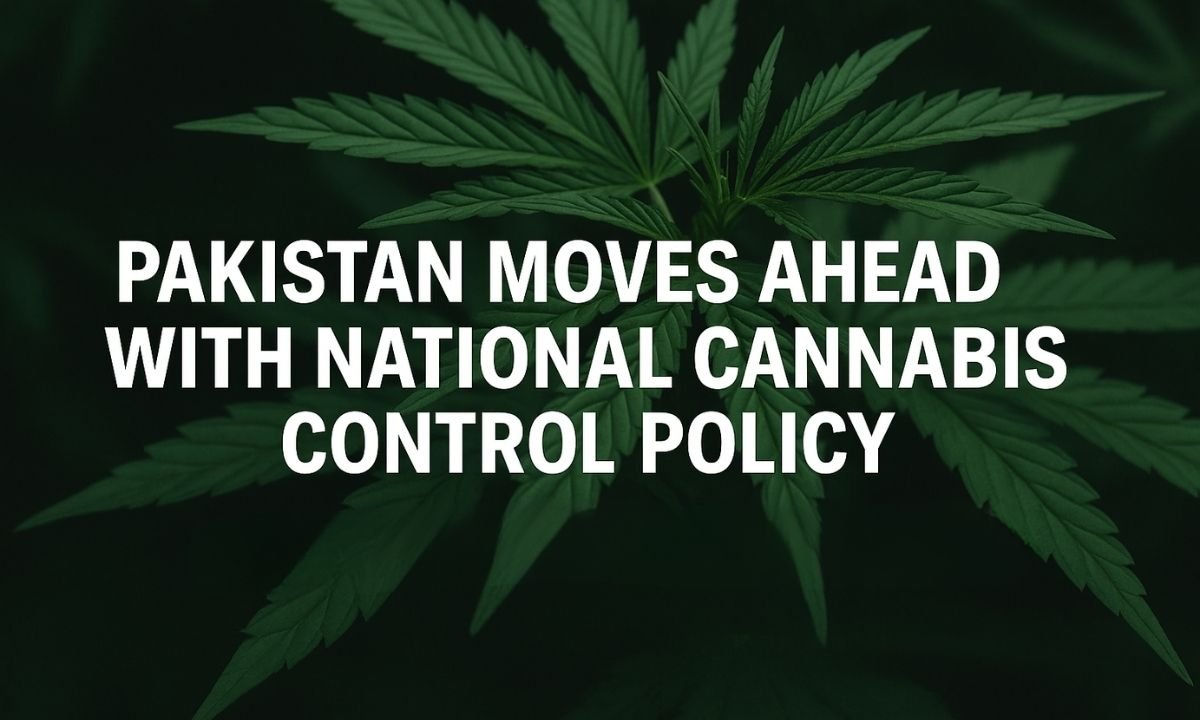
Pakistan’s newly endorsed National Cannabis Control and Regulatory Policy, 2025 sets a formal regulatory framework for medical and industrial cannabis, dovetailing with provincial rules and a substantial Rs 2 billion infrastructure spend amid economic diversification efforts.
By Salman Khan
Islamabad: Law Division has endorsed National Cannabis Policy 2025 aimed regulating cultivation and sale of cannabis.
Currency Converter
The draft of the policy was submitted to Prime Minister Shahbaz Sharif. But premier had directed to seek endorsement of Law Division before tabling it before cabinet for formal approval.
The federal government has received final legal endorsement from the Law Division for the National Cannabis Control and Regulatory Policy, 2025. The Cannabis Control and Regulatory Authority (CCRA) has drafted this policy.
The policy was unanimously approved by CCRA’s Board of Governors in April 2025 after earlier deliberations in August 2024 and December 2024, with participation from federal and provincial stakeholders. The prime minister also directed consultations with provinces before legal submission to the cabinet.
This move builds on prior developments: Pakistan legalized industrial hemp and medicinal cannabis extracts in September 2020, but lacked a regulatory framework until early 2024 when the CCRA ordinance was promulgated.
Budgetary Approval
The 2025–26 Public Sector Development Programme allocates approximately Rs 1.95 billion (US $6.9 million) towards establishing cannabis greenhouses, a national analytical laboratory, and a central authority for hemp and medicinal cannabis. The Pakistan Council of Scientific and Industrial Research (PCSIR) will also receive Rs 380 million for experimental cultivation and testing facilities ProPakistani revealed.
Provinces Step Forward
The Khyber Pakhtunkhwa (KP) government has already approved a provincial regulatory framework allowing licensed cannabis cultivation in selected districts, with oversight from a multi-departmental committee involving agriculture, health, excise, and narcotics control departments, Dawn reported.
This provincial momentum is mirrored federally, where the cabinet has approved similar rules for KP to operationalize industrial hemp and medicinal cannabis under CCRA’s guiding legislation.
Timing, Economic Drivers & Institutional Gaps
Facing economic fragility, Pakistan is looking to hemp and cannabis as export-oriented growth sectors. Analysts estimate the global medical cannabis market at $30 billion, with industrial hemp at around $5–7 billion annually, Business of Cannabis reported.
Coherence in Policy vs. Provincial Autonomy
While a national policy seeks uniformity, KP’s proactive rulemaking raises questions about federal-provincial dynamics in implementation. Provinces like KP may outpace federal timelines, potentially causing regulatory fragmentation.
Funding for infrastructure is encouraging, but some observers note that essential licensing mechanisms under CCRA remain delayed. Until CCRA is fully functional, investors and prospective licensees may wait on commercial rollout. (HempToday®, Dentons)
Expert and Public Cautions
Academic commentary in Dawn has urged creation of “cannabis‑free zones” around educational and recreational spaces to avoid normalization or unintended exposure. (Dawn)
Separately, a development writer raised concerns that hemp legalization may undercut livelihoods in the former FATA (merged areas), where unregulated growers may face exclusion unless integrated properly, Dawn reported.
Voices from the Field
“Ensuring cannabis‑free zones around educational institutions … is imperative”
— Dawn op‑ed, May 2024, Dawn says.
“This policy seems to be getting traction … to now take away these peoples’ livelihoods … is a grave fallacy.”
— Dawn, March 2025, on merged‑areas farmers in Dawn
Pakistan’s formal adoption of the National Cannabis Control and Regulatory Policy, 2025 marks a pivotal step in transforming an informal hemp tradition into a structured economic sector. With significant budget support and provincial engagement—especially from KP—the groundwork is being laid for industrial and medical cannabis. Still, the pace of implementation, social safeguards, and equitable inclusion of marginalized growers will determine whether this becomes a sustainable success or a mismanaged opportunity.